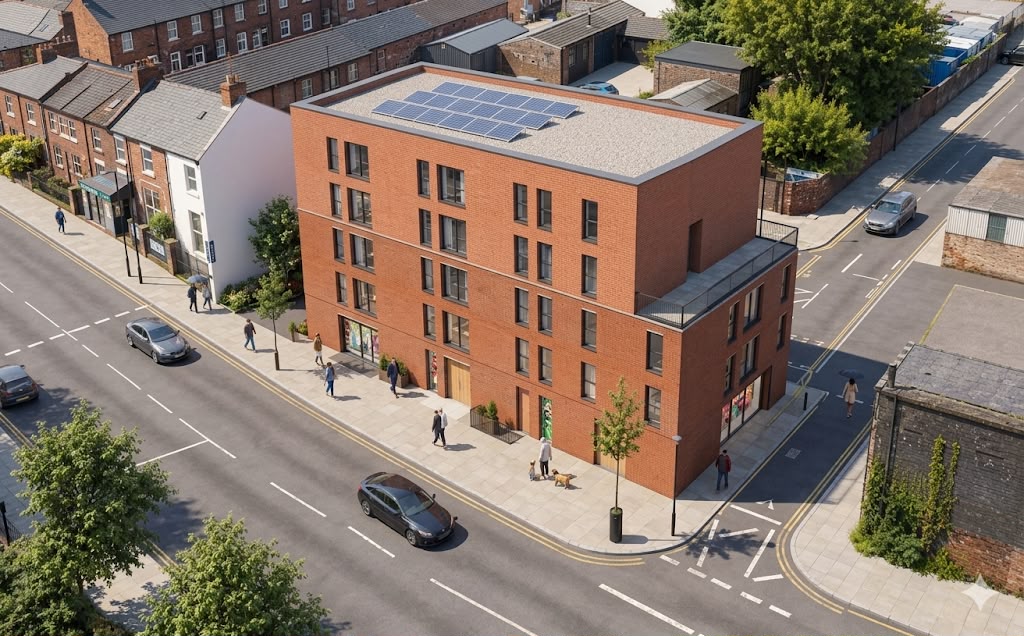
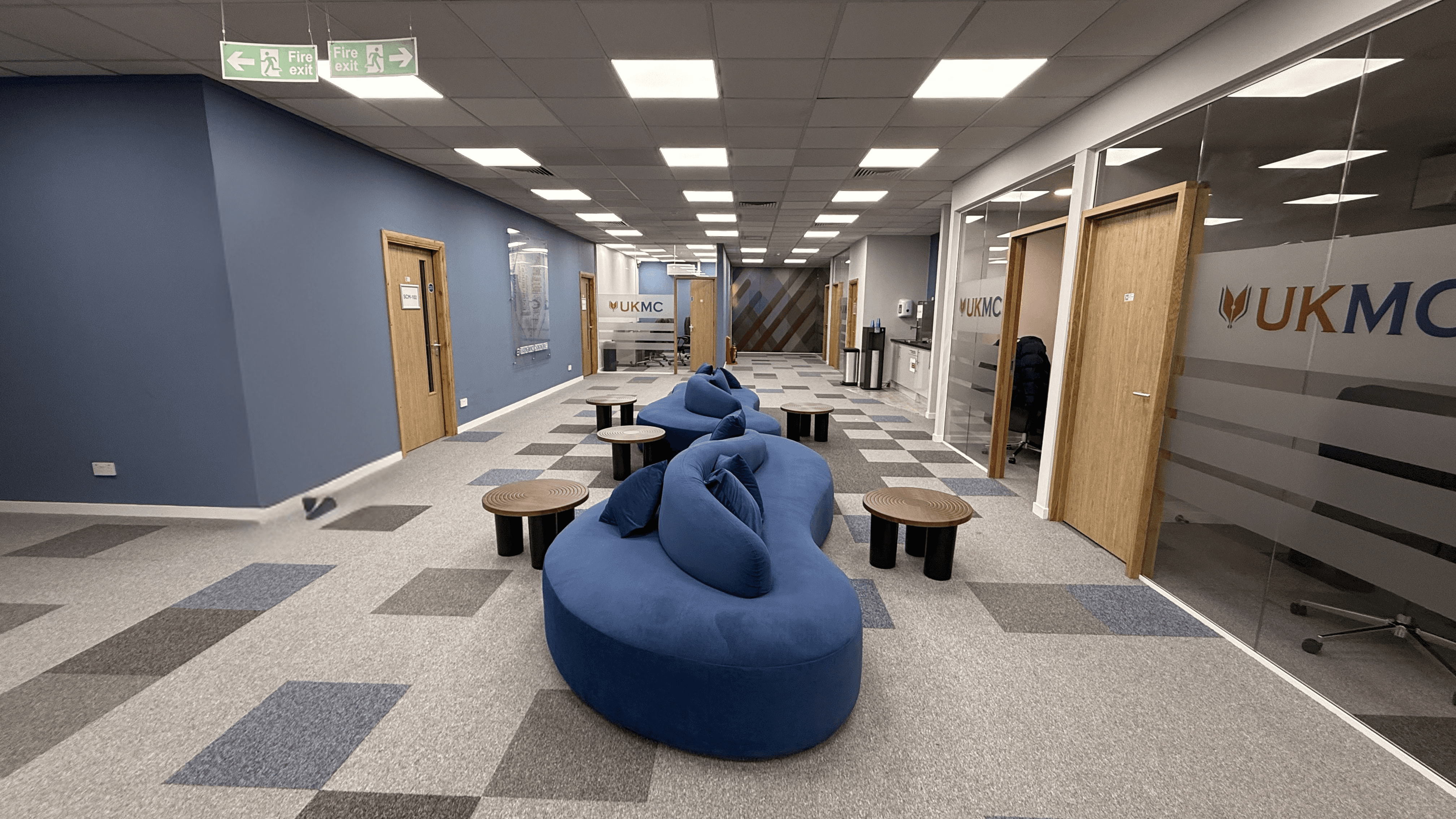
Office to Residential vs Retail to Residential: Which Conversion Asset Delivers Stronger Returns?
Key Takeaways
Office buildings are the most common conversion candidate because of their floor plate scale, structural grid, and existing services capacity.
Retail units, particularly upper floors above shops, are underused as a conversion opportunity despite often sitting in prime locations with strong residential demand.
Office conversions typically deliver more units per scheme but face deeper floor plate and daylight challenges.
Retail conversions typically deliver fewer units per scheme but benefit from better street frontage, natural light, and high street locations.
The financial logic differs significantly between the two asset classes. Acquisition cost, conversion cost, end value per square foot, and unit mix all behave differently.
The right asset class depends on the developer's scale, target market, and tolerance for complexity. Neither is universally better.
Why This Comparison Matters
Most commercial conversion advice treats vacant commercial buildings as a single category. In practice, the asset class matters enormously. An office conversion and a retail conversion are different propositions in almost every way that affects the financial outcome, from acquisition logic to unit mix to end value.
For Dave, the question at acquisition stage is not just whether to convert, but what to convert. The answer shapes the appraisal, the planning route, the construction strategy, and the exit position. Choosing the wrong asset class for the scheme's strategic intent is one of the most expensive errors in commercial conversion, and one that is rarely discussed.
This article walks through how office and retail conversions actually differ, where each performs best, and how to think about the choice at acquisition stage.
What Office Buildings Offer as Conversion Stock
Secondary office buildings have been the dominant source of conversion stock since Permitted Development rights for office-to-residential were introduced in 2013. There are reasons for that, and they remain valid today.
Office buildings typically offer scale. A standard suburban or town centre office building of 1,000 to 3,000 square metres can yield anywhere from 15 to 40 residential units, depending on the floor plate and the unit mix. That scale produces efficiencies in construction, finance, and management that smaller schemes cannot match.
Office buildings also tend to have predictable structural grids, existing service risers, and floor-to-ceiling heights that work well for residential conversion. The bones of the building are usually compatible with the new use, which reduces structural intervention costs.
The challenge with offices is the floor plate. Deep-plan office buildings, designed for open-plan workspace, often have central zones that sit too far from any external wall to satisfy natural light requirements for habitable rooms. The conversion design has to work around this, which usually means giving up some of the floor area to internal circulation, service zones, or non-habitable uses. On the wrong building, this can erode the unit count significantly.
Acquisition prices for secondary offices have softened since 2021. Commercial valuations in secondary locations have declined by up to 15% in many markets, which has created an acquisition arbitrage opportunity for developers who can see the residential conversion potential.
What Retail Buildings Offer as Conversion Stock
Retail conversion is the less obvious play, but in many markets it produces stronger results per scheme.
Retail units typically sit in better locations than secondary offices. High street and town centre positions, walking distance to amenities, transport, and services, are the locations residential buyers and renters actively want. An office building on a business park has location challenges that a retail unit on the high street does not.
Retail units also have natural light advantages. Shop frontages tend to be larger and better positioned than office facades, which means habitable rooms can be configured more easily within the existing envelope. The constraint is the depth of the unit, since many retail buildings are deep with the rear of the unit sitting far from any natural light source.
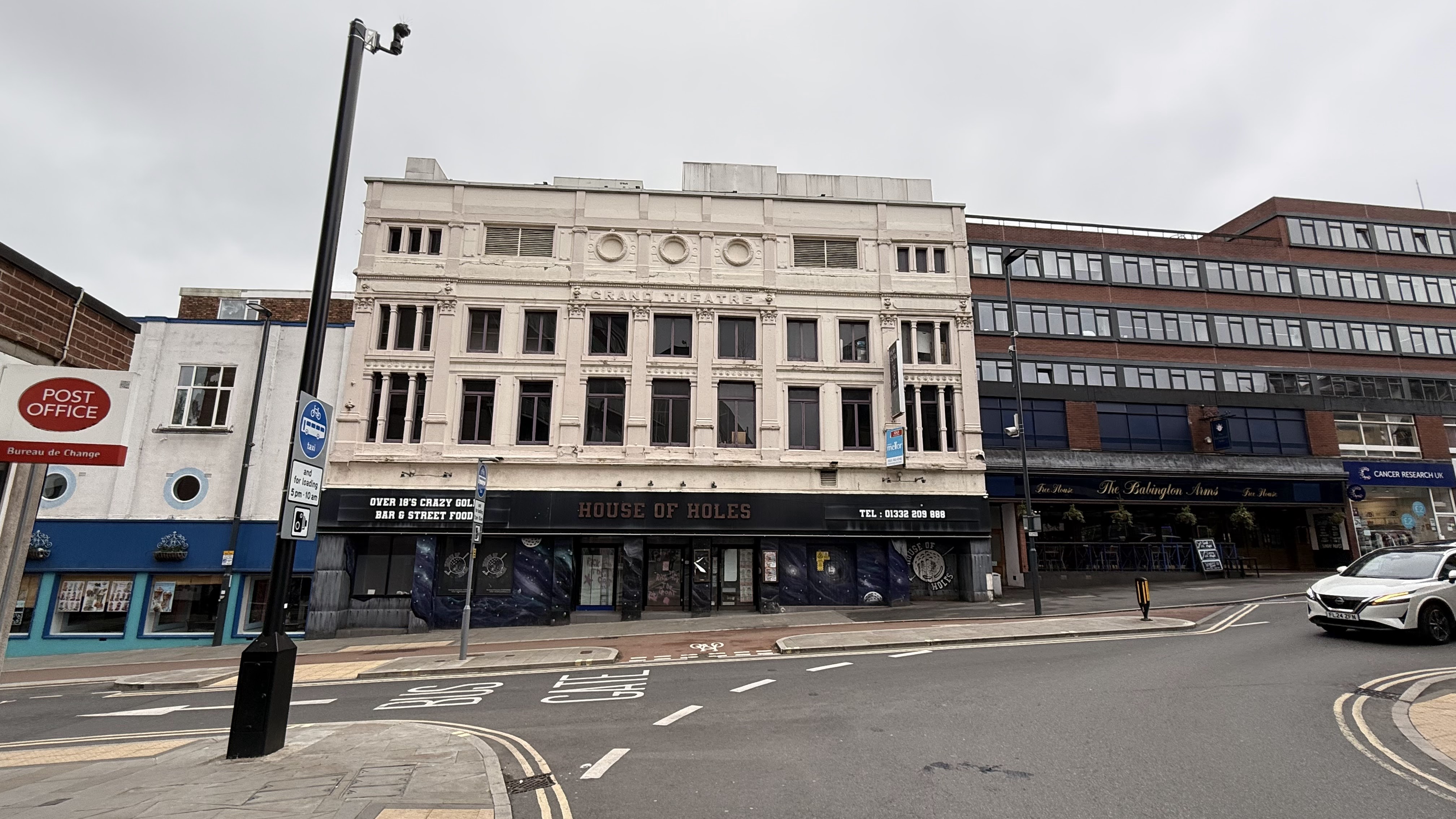
The most underused retail conversion opportunity is the upper floors. Across the UK high street, thousands of upper floors above active shops sit vacant or in low-grade storage use. These are the cleanest residential conversion opportunities available, often with strong natural light, manageable floor plate depth, and existing access arrangements. The ground floor remains in retail use, the upper floors convert to residential, and the developer captures the upside on the upper floor floorspace without disrupting the commercial yield below.
The constraint with retail conversion is scale. A single retail unit usually delivers fewer units than a comparable office building, which means the per-scheme economics work differently. A retail conversion is rarely a 20-unit scheme. It is more often a 4-unit, 6-unit, or 10-unit scheme.
The Comparison That Actually Matters
The factors below are the ones that shape the financial outcome on either asset class.
Factor | Office Conversion | Retail Conversion |
Typical scheme size | 15 to 40 units | 2 to 12 units |
Floor plate depth | Often deep, light challenges | Variable, frontage advantage |
Natural light | Difficult on deep plans | Generally easier |
Existing services capacity | Strong | Variable |
Structural grid | Predictable | Less predictable |
Acquisition cost per sqft | Lower in secondary locations | Higher in high street locations |
End value per sqft | Standard regional residential | Often higher due to location |
Unit mix flexibility | Constrained by deep plans | Constrained by unit size |
Planning route | Class MA (PD), full planning | Class MA (PD), Class G (upper floors), full planning |
Mixed-use retention | Not typical | Common (ground floor retail retained) |
Scheme complexity | Moderate to high | Lower to moderate |
Yield per unit | Lower | Higher |
Total scheme yield | Higher (more units) | Lower (fewer units) |
Best fit for | Mid-to-large developers, BTR exit | Smaller schemes, individual unit sales, mixed-use plays |
The table illustrates that the two asset classes are not really competing for the same opportunity. They serve different developer strategies, and the right choice depends on what the developer is trying to build.
When Office Conversion Is the Right Play
Office conversion is the right play when the developer wants scale, the location supports residential demand, and the building geometry allows for an efficient unit layout.
In practice, this means a secondary office in a town centre or established commercial district where residential rental and sales demand is proven. The building has shallow enough floor plates to allow good natural light to habitable rooms. The structural grid supports a sensible unit layout. The services capacity is sufficient to handle the new use without major upgrades. The acquisition price reflects the softened office market rather than residential land values.
The financial logic on a successful office conversion is driven by scale. A 25-unit office conversion can absorb a higher proportional consultant fee load, attract development finance more easily, and produce a stronger exit position for either build-to-sell or build-to-rent strategies. The per-unit margin may be lower than a small retail scheme, but the total scheme profit is higher.
This is the asset class that suits developers operating at £5 million-plus project scale, with the capacity to manage larger contracts and the relationships to place the units at exit.
When Retail Conversion Is the Right Play
Retail conversion is the right play when the location is the asset, the scheme size suits a smaller scale of operation, and the developer wants to retain a commercial income stream below the residential.
In practice, this means a high street or town centre retail building where the upper floors are vacant or underused, or a redundant single-storey retail unit on a prime residential street. The location commands strong residential values per square foot. The existing fabric supports a clean conversion of the upper floors with minimal disruption to ground floor retail trading. The scheme is small enough to be managed without main contractor overheads, and the unit count works as direct sales to owner-occupiers or local investors.
The financial logic on a retail conversion is driven by location and unit value. A 6-unit upper floor conversion in a strong town centre location often produces a higher per-unit margin than a 25-unit office conversion in a weaker location. The total scheme yield is lower in absolute terms, but the return on invested capital can be stronger.
This is the asset class that suits developers who want to operate at smaller scheme size with higher control, or who want to retain a long-term mixed-use position with both residential and commercial income.
Two Illustrative Scenarios
The clearest way to see the difference is on worked examples. Both scenarios are illustrative, not prescriptive.
Scenario A: Office conversion. A 1,500 sqm secondary office building in a regional North West town centre is acquired for £1.05 million, reflecting the softened office market. The building has shallow enough floor plates to support a 22-unit conversion under Class MA prior approval. Construction cost runs at approximately £1,800 per sqm. Total all-in cost, including finance and professional fees, sits around £4.6 million. The completed scheme has a gross development value of approximately £5.8 million at standard regional residential values. Gross development profit is in the £1.2 million range, with an IRR appropriate to a 14-month delivery timeline.
Scenario B: Retail conversion. A 380 sqm two-storey retail building in a strong town centre location is acquired for £620,000, reflecting prime high street values. The ground floor remains in retail use with an existing tenant in place. The upper two floors convert to 6 apartments under a combination of Class G prior approval and a small full planning element for facade adjustments. Construction cost runs at approximately £1,600 per sqm on the converted floorspace. Total all-in cost is around £1.4 million. The completed scheme produces 6 apartments at higher residential values per square foot due to the prime location, with a gross development value of around £1.8 million. Gross development profit is in the £350,000 range, with the retained retail income providing ongoing yield on the remaining ground floor.
The total profit number on the office scheme is larger. The per-unit return and the operating simplicity on the retail scheme are stronger. Neither is universally the right answer. The right answer depends on what the developer is trying to build at portfolio level.
How the Planning Route Differs Between Asset Classes
Both asset classes can be converted under Permitted Development, but the routes differ.
Office conversion typically uses Class MA prior approval, the broadest PD route. Class MA covers full conversion of the building from Use Class E to residential, which suits offices being fully repurposed.
Retail conversion offers two routes. Where the whole building is converting, Class MA applies in the same way as for offices. Where only the upper floors are converting and the ground floor retail is being retained, Class G is the more appropriate route, designed specifically for mixed-use conversions where commercial space remains on the ground floor.
For retail buildings in conservation areas, additional considerations apply at ground floor level even where Class MA is used, because the prior approval includes an assessment of impact on the character and sustainability of the conservation area.
For both asset classes, full planning is the alternative route where the PD route is restricted by an Article 4 direction, where the building is listed, or where the scheme requires design flexibility beyond what PD allows. The route decision logic is the same as for any commercial conversion, and the comparison is covered in detail in Permitted Development vs Full Planning: Which Route Delivers Better Returns on Commercial Conversions?.
Common Mistakes in Asset Class Selection
The most frequent error is treating office and retail conversion as interchangeable. They are not. A developer who has delivered a successful office conversion does not automatically have the right approach for a retail scheme, and vice versa.
The second error is misjudging the scale fit. Developers operating at £5 million-plus project scale often underestimate retail conversion because the unit counts feel too small to be worth the consultant input. The reverse is also true. Developers used to smaller schemes can overcommit to an office conversion and find themselves managing a project that requires capabilities and relationships they do not have.
The third error is location blindness on office acquisitions. Secondary offices are cheaper for a reason. The location may not actually support residential demand at the value levels the appraisal assumes, and the cheap acquisition is sometimes a trap. Retail conversion is harder to get wrong on location, because the prime high street location is the asset.
The fourth error is missing the upper floors opportunity. Across the UK, vacant upper floors above active shops are one of the most underused conversion opportunities available, and most developers walk past them because they are looking for whole-building plays.
How Studio Tashkeel Architecture Approaches the Asset Class Decision
Studio Tashkeel Architecture works with developers at acquisition stage to test both asset classes against the developer's strategy, not just the scheme's individual numbers. The right asset class is the one that fits the developer's portfolio, scale, and exit strategy, as well as the building.
We test floor plate efficiency, natural light performance, and unit mix flexibility at feasibility stage, on either asset class. We also model the financial logic on the developer's specific cost of capital and target return profile, so the appraisal answers the strategic question, not just the technical one.
The discipline that holds this together is the single point of contact delivery model. Planning, design, and commercial logic are aligned from the first feasibility review. The developer is not coordinating consultants giving conflicting advice on a critical acquisition decision.
Frequently Asked Questions
Which asset class produces stronger returns, office or retail?
There is no universal answer. Office conversions produce larger total scheme profits because of scale. Retail conversions often produce stronger per-unit margins and return on invested capital, particularly where the location is prime and the upper floors are being converted while ground floor retail is retained. The right choice depends on the developer's scale, strategy, and target return profile.
Why are retail conversions less common than office conversions?
Three reasons. Retail conversions are usually smaller in unit count, which makes them less visible in market data. The opportunity is fragmented across thousands of individual high street buildings rather than concentrated in larger office stock. And many developers default to office conversion because the PD framework was originally designed around offices and the market knowledge is more established.
Can I convert just the upper floors of a retail building and keep the shop trading?
Yes. This is one of the most underused conversion opportunities in the UK market. Class G permitted development is designed specifically for this scenario, allowing upper floors to convert to residential while the ground floor remains in commercial use. The result is a mixed-use building with retained retail income alongside the residential yield.
What are the natural light challenges for office conversions?
Deep-plan office buildings often have central zones that sit too far from any external wall to satisfy natural light requirements for habitable rooms. This usually means giving up some of the floor area to internal circulation, service zones, or non-habitable uses, which reduces the unit count. The design solution depends on the building, and it is one of the things to test at the feasibility stage before acquisition.
Are end values higher on retail conversions than office conversions?
Often yes, on a per square foot basis, because retail buildings tend to sit in stronger residential locations. Total scheme value is usually higher on office conversions because of the greater unit count. Per-unit value depends on the location and the specification.
Which asset class is better suited to a build-to-rent exit?
Office conversions, generally. The scale of an office conversion produces enough units to make BTR management economically viable. Retail conversions, with smaller unit counts, typically suit build-to-sell or individual unit-by-unit rental rather than a managed BTR exit.
Ready to Assess the Right Asset Class for Your Strategy?
If you are evaluating commercial buildings for conversion and want a structured assessment that tests asset class fit against your investment strategy before you commit to acquisition, Studio Tashkeel Architecture can provide a feasibility review aligned to your timeline.
Visit our Commercial clients page →
Further Reading
Key Takeaways
Office buildings are the most common conversion candidate because of their floor plate scale, structural grid, and existing services capacity.
Retail units, particularly upper floors above shops, are underused as a conversion opportunity despite often sitting in prime locations with strong residential demand.
Office conversions typically deliver more units per scheme but face deeper floor plate and daylight challenges.
Retail conversions typically deliver fewer units per scheme but benefit from better street frontage, natural light, and high street locations.
The financial logic differs significantly between the two asset classes. Acquisition cost, conversion cost, end value per square foot, and unit mix all behave differently.
The right asset class depends on the developer's scale, target market, and tolerance for complexity. Neither is universally better.
Why This Comparison Matters
Most commercial conversion advice treats vacant commercial buildings as a single category. In practice, the asset class matters enormously. An office conversion and a retail conversion are different propositions in almost every way that affects the financial outcome, from acquisition logic to unit mix to end value.
For Dave, the question at acquisition stage is not just whether to convert, but what to convert. The answer shapes the appraisal, the planning route, the construction strategy, and the exit position. Choosing the wrong asset class for the scheme's strategic intent is one of the most expensive errors in commercial conversion, and one that is rarely discussed.
This article walks through how office and retail conversions actually differ, where each performs best, and how to think about the choice at acquisition stage.
What Office Buildings Offer as Conversion Stock
Secondary office buildings have been the dominant source of conversion stock since Permitted Development rights for office-to-residential were introduced in 2013. There are reasons for that, and they remain valid today.
Office buildings typically offer scale. A standard suburban or town centre office building of 1,000 to 3,000 square metres can yield anywhere from 15 to 40 residential units, depending on the floor plate and the unit mix. That scale produces efficiencies in construction, finance, and management that smaller schemes cannot match.
Office buildings also tend to have predictable structural grids, existing service risers, and floor-to-ceiling heights that work well for residential conversion. The bones of the building are usually compatible with the new use, which reduces structural intervention costs.
The challenge with offices is the floor plate. Deep-plan office buildings, designed for open-plan workspace, often have central zones that sit too far from any external wall to satisfy natural light requirements for habitable rooms. The conversion design has to work around this, which usually means giving up some of the floor area to internal circulation, service zones, or non-habitable uses. On the wrong building, this can erode the unit count significantly.
Acquisition prices for secondary offices have softened since 2021. Commercial valuations in secondary locations have declined by up to 15% in many markets, which has created an acquisition arbitrage opportunity for developers who can see the residential conversion potential.
What Retail Buildings Offer as Conversion Stock
Retail conversion is the less obvious play, but in many markets it produces stronger results per scheme.
Retail units typically sit in better locations than secondary offices. High street and town centre positions, walking distance to amenities, transport, and services, are the locations residential buyers and renters actively want. An office building on a business park has location challenges that a retail unit on the high street does not.
Retail units also have natural light advantages. Shop frontages tend to be larger and better positioned than office facades, which means habitable rooms can be configured more easily within the existing envelope. The constraint is the depth of the unit, since many retail buildings are deep with the rear of the unit sitting far from any natural light source.
The most underused retail conversion opportunity is the upper floors. Across the UK high street, thousands of upper floors above active shops sit vacant or in low-grade storage use. These are the cleanest residential conversion opportunities available, often with strong natural light, manageable floor plate depth, and existing access arrangements. The ground floor remains in retail use, the upper floors convert to residential, and the developer captures the upside on the upper floor floorspace without disrupting the commercial yield below.
The constraint with retail conversion is scale. A single retail unit usually delivers fewer units than a comparable office building, which means the per-scheme economics work differently. A retail conversion is rarely a 20-unit scheme. It is more often a 4-unit, 6-unit, or 10-unit scheme.
The Comparison That Actually Matters
The factors below are the ones that shape the financial outcome on either asset class.
Factor | Office Conversion | Retail Conversion |
Typical scheme size | 15 to 40 units | 2 to 12 units |
Floor plate depth | Often deep, light challenges | Variable, frontage advantage |
Natural light | Difficult on deep plans | Generally easier |
Existing services capacity | Strong | Variable |
Structural grid | Predictable | Less predictable |
Acquisition cost per sqft | Lower in secondary locations | Higher in high street locations |
End value per sqft | Standard regional residential | Often higher due to location |
Unit mix flexibility | Constrained by deep plans | Constrained by unit size |
Planning route | Class MA (PD), full planning | Class MA (PD), Class G (upper floors), full planning |
Mixed-use retention | Not typical | Common (ground floor retail retained) |
Scheme complexity | Moderate to high | Lower to moderate |
Yield per unit | Lower | Higher |
Total scheme yield | Higher (more units) | Lower (fewer units) |
Best fit for | Mid-to-large developers, BTR exit | Smaller schemes, individual unit sales, mixed-use plays |
The table illustrates that the two asset classes are not really competing for the same opportunity. They serve different developer strategies, and the right choice depends on what the developer is trying to build.
When Office Conversion Is the Right Play
Office conversion is the right play when the developer wants scale, the location supports residential demand, and the building geometry allows for an efficient unit layout.
In practice, this means a secondary office in a town centre or established commercial district where residential rental and sales demand is proven. The building has shallow enough floor plates to allow good natural light to habitable rooms. The structural grid supports a sensible unit layout. The services capacity is sufficient to handle the new use without major upgrades. The acquisition price reflects the softened office market rather than residential land values.
The financial logic on a successful office conversion is driven by scale. A 25-unit office conversion can absorb a higher proportional consultant fee load, attract development finance more easily, and produce a stronger exit position for either build-to-sell or build-to-rent strategies. The per-unit margin may be lower than a small retail scheme, but the total scheme profit is higher.
This is the asset class that suits developers operating at £5 million-plus project scale, with the capacity to manage larger contracts and the relationships to place the units at exit.
When Retail Conversion Is the Right Play
Retail conversion is the right play when the location is the asset, the scheme size suits a smaller scale of operation, and the developer wants to retain a commercial income stream below the residential.
In practice, this means a high street or town centre retail building where the upper floors are vacant or underused, or a redundant single-storey retail unit on a prime residential street. The location commands strong residential values per square foot. The existing fabric supports a clean conversion of the upper floors with minimal disruption to ground floor retail trading. The scheme is small enough to be managed without main contractor overheads, and the unit count works as direct sales to owner-occupiers or local investors.
The financial logic on a retail conversion is driven by location and unit value. A 6-unit upper floor conversion in a strong town centre location often produces a higher per-unit margin than a 25-unit office conversion in a weaker location. The total scheme yield is lower in absolute terms, but the return on invested capital can be stronger.
This is the asset class that suits developers who want to operate at smaller scheme size with higher control, or who want to retain a long-term mixed-use position with both residential and commercial income.
Two Illustrative Scenarios
The clearest way to see the difference is on worked examples. Both scenarios are illustrative, not prescriptive.
Scenario A: Office conversion. A 1,500 sqm secondary office building in a regional North West town centre is acquired for £1.05 million, reflecting the softened office market. The building has shallow enough floor plates to support a 22-unit conversion under Class MA prior approval. Construction cost runs at approximately £1,800 per sqm. Total all-in cost, including finance and professional fees, sits around £4.6 million. The completed scheme has a gross development value of approximately £5.8 million at standard regional residential values. Gross development profit is in the £1.2 million range, with an IRR appropriate to a 14-month delivery timeline.
Scenario B: Retail conversion. A 380 sqm two-storey retail building in a strong town centre location is acquired for £620,000, reflecting prime high street values. The ground floor remains in retail use with an existing tenant in place. The upper two floors convert to 6 apartments under a combination of Class G prior approval and a small full planning element for facade adjustments. Construction cost runs at approximately £1,600 per sqm on the converted floorspace. Total all-in cost is around £1.4 million. The completed scheme produces 6 apartments at higher residential values per square foot due to the prime location, with a gross development value of around £1.8 million. Gross development profit is in the £350,000 range, with the retained retail income providing ongoing yield on the remaining ground floor.
The total profit number on the office scheme is larger. The per-unit return and the operating simplicity on the retail scheme are stronger. Neither is universally the right answer. The right answer depends on what the developer is trying to build at portfolio level.
How the Planning Route Differs Between Asset Classes
Both asset classes can be converted under Permitted Development, but the routes differ.
Office conversion typically uses Class MA prior approval, the broadest PD route. Class MA covers full conversion of the building from Use Class E to residential, which suits offices being fully repurposed.
Retail conversion offers two routes. Where the whole building is converting, Class MA applies in the same way as for offices. Where only the upper floors are converting and the ground floor retail is being retained, Class G is the more appropriate route, designed specifically for mixed-use conversions where commercial space remains on the ground floor.
For retail buildings in conservation areas, additional considerations apply at ground floor level even where Class MA is used, because the prior approval includes an assessment of impact on the character and sustainability of the conservation area.
For both asset classes, full planning is the alternative route where the PD route is restricted by an Article 4 direction, where the building is listed, or where the scheme requires design flexibility beyond what PD allows. The route decision logic is the same as for any commercial conversion, and the comparison is covered in detail in Permitted Development vs Full Planning: Which Route Delivers Better Returns on Commercial Conversions?.
Common Mistakes in Asset Class Selection
The most frequent error is treating office and retail conversion as interchangeable. They are not. A developer who has delivered a successful office conversion does not automatically have the right approach for a retail scheme, and vice versa.
The second error is misjudging the scale fit. Developers operating at £5 million-plus project scale often underestimate retail conversion because the unit counts feel too small to be worth the consultant input. The reverse is also true. Developers used to smaller schemes can overcommit to an office conversion and find themselves managing a project that requires capabilities and relationships they do not have.
The third error is location blindness on office acquisitions. Secondary offices are cheaper for a reason. The location may not actually support residential demand at the value levels the appraisal assumes, and the cheap acquisition is sometimes a trap. Retail conversion is harder to get wrong on location, because the prime high street location is the asset.
The fourth error is missing the upper floors opportunity. Across the UK, vacant upper floors above active shops are one of the most underused conversion opportunities available, and most developers walk past them because they are looking for whole-building plays.
How Studio Tashkeel Architecture Approaches the Asset Class Decision
Studio Tashkeel Architecture works with developers at acquisition stage to test both asset classes against the developer's strategy, not just the scheme's individual numbers. The right asset class is the one that fits the developer's portfolio, scale, and exit strategy, as well as the building.
We test floor plate efficiency, natural light performance, and unit mix flexibility at feasibility stage, on either asset class. We also model the financial logic on the developer's specific cost of capital and target return profile, so the appraisal answers the strategic question, not just the technical one.
The discipline that holds this together is the single point of contact delivery model. Planning, design, and commercial logic are aligned from the first feasibility review. The developer is not coordinating consultants giving conflicting advice on a critical acquisition decision.
Frequently Asked Questions
Which asset class produces stronger returns, office or retail?
There is no universal answer. Office conversions produce larger total scheme profits because of scale. Retail conversions often produce stronger per-unit margins and return on invested capital, particularly where the location is prime and the upper floors are being converted while ground floor retail is retained. The right choice depends on the developer's scale, strategy, and target return profile.
Why are retail conversions less common than office conversions?
Three reasons. Retail conversions are usually smaller in unit count, which makes them less visible in market data. The opportunity is fragmented across thousands of individual high street buildings rather than concentrated in larger office stock. And many developers default to office conversion because the PD framework was originally designed around offices and the market knowledge is more established.
Can I convert just the upper floors of a retail building and keep the shop trading?
Yes. This is one of the most underused conversion opportunities in the UK market. Class G permitted development is designed specifically for this scenario, allowing upper floors to convert to residential while the ground floor remains in commercial use. The result is a mixed-use building with retained retail income alongside the residential yield.
What are the natural light challenges for office conversions?
Deep-plan office buildings often have central zones that sit too far from any external wall to satisfy natural light requirements for habitable rooms. This usually means giving up some of the floor area to internal circulation, service zones, or non-habitable uses, which reduces the unit count. The design solution depends on the building, and it is one of the things to test at the feasibility stage before acquisition.
Are end values higher on retail conversions than office conversions?
Often yes, on a per square foot basis, because retail buildings tend to sit in stronger residential locations. Total scheme value is usually higher on office conversions because of the greater unit count. Per-unit value depends on the location and the specification.
Which asset class is better suited to a build-to-rent exit?
Office conversions, generally. The scale of an office conversion produces enough units to make BTR management economically viable. Retail conversions, with smaller unit counts, typically suit build-to-sell or individual unit-by-unit rental rather than a managed BTR exit.
Ready to Assess the Right Asset Class for Your Strategy?
If you are evaluating commercial buildings for conversion and want a structured assessment that tests asset class fit against your investment strategy before you commit to acquisition, Studio Tashkeel Architecture can provide a feasibility review aligned to your timeline.
Visit our Commercial clients page →
Further Reading
Key Takeaways
Office buildings are the most common conversion candidate because of their floor plate scale, structural grid, and existing services capacity.
Retail units, particularly upper floors above shops, are underused as a conversion opportunity despite often sitting in prime locations with strong residential demand.
Office conversions typically deliver more units per scheme but face deeper floor plate and daylight challenges.
Retail conversions typically deliver fewer units per scheme but benefit from better street frontage, natural light, and high street locations.
The financial logic differs significantly between the two asset classes. Acquisition cost, conversion cost, end value per square foot, and unit mix all behave differently.
The right asset class depends on the developer's scale, target market, and tolerance for complexity. Neither is universally better.
Why This Comparison Matters
Most commercial conversion advice treats vacant commercial buildings as a single category. In practice, the asset class matters enormously. An office conversion and a retail conversion are different propositions in almost every way that affects the financial outcome, from acquisition logic to unit mix to end value.
For Dave, the question at acquisition stage is not just whether to convert, but what to convert. The answer shapes the appraisal, the planning route, the construction strategy, and the exit position. Choosing the wrong asset class for the scheme's strategic intent is one of the most expensive errors in commercial conversion, and one that is rarely discussed.
This article walks through how office and retail conversions actually differ, where each performs best, and how to think about the choice at acquisition stage.
What Office Buildings Offer as Conversion Stock
Secondary office buildings have been the dominant source of conversion stock since Permitted Development rights for office-to-residential were introduced in 2013. There are reasons for that, and they remain valid today.
Office buildings typically offer scale. A standard suburban or town centre office building of 1,000 to 3,000 square metres can yield anywhere from 15 to 40 residential units, depending on the floor plate and the unit mix. That scale produces efficiencies in construction, finance, and management that smaller schemes cannot match.
Office buildings also tend to have predictable structural grids, existing service risers, and floor-to-ceiling heights that work well for residential conversion. The bones of the building are usually compatible with the new use, which reduces structural intervention costs.
The challenge with offices is the floor plate. Deep-plan office buildings, designed for open-plan workspace, often have central zones that sit too far from any external wall to satisfy natural light requirements for habitable rooms. The conversion design has to work around this, which usually means giving up some of the floor area to internal circulation, service zones, or non-habitable uses. On the wrong building, this can erode the unit count significantly.
Acquisition prices for secondary offices have softened since 2021. Commercial valuations in secondary locations have declined by up to 15% in many markets, which has created an acquisition arbitrage opportunity for developers who can see the residential conversion potential.
What Retail Buildings Offer as Conversion Stock
Retail conversion is the less obvious play, but in many markets it produces stronger results per scheme.
Retail units typically sit in better locations than secondary offices. High street and town centre positions, walking distance to amenities, transport, and services, are the locations residential buyers and renters actively want. An office building on a business park has location challenges that a retail unit on the high street does not.
Retail units also have natural light advantages. Shop frontages tend to be larger and better positioned than office facades, which means habitable rooms can be configured more easily within the existing envelope. The constraint is the depth of the unit, since many retail buildings are deep with the rear of the unit sitting far from any natural light source.
The most underused retail conversion opportunity is the upper floors. Across the UK high street, thousands of upper floors above active shops sit vacant or in low-grade storage use. These are the cleanest residential conversion opportunities available, often with strong natural light, manageable floor plate depth, and existing access arrangements. The ground floor remains in retail use, the upper floors convert to residential, and the developer captures the upside on the upper floor floorspace without disrupting the commercial yield below.
The constraint with retail conversion is scale. A single retail unit usually delivers fewer units than a comparable office building, which means the per-scheme economics work differently. A retail conversion is rarely a 20-unit scheme. It is more often a 4-unit, 6-unit, or 10-unit scheme.
The Comparison That Actually Matters
The factors below are the ones that shape the financial outcome on either asset class.
Factor | Office Conversion | Retail Conversion |
Typical scheme size | 15 to 40 units | 2 to 12 units |
Floor plate depth | Often deep, light challenges | Variable, frontage advantage |
Natural light | Difficult on deep plans | Generally easier |
Existing services capacity | Strong | Variable |
Structural grid | Predictable | Less predictable |
Acquisition cost per sqft | Lower in secondary locations | Higher in high street locations |
End value per sqft | Standard regional residential | Often higher due to location |
Unit mix flexibility | Constrained by deep plans | Constrained by unit size |
Planning route | Class MA (PD), full planning | Class MA (PD), Class G (upper floors), full planning |
Mixed-use retention | Not typical | Common (ground floor retail retained) |
Scheme complexity | Moderate to high | Lower to moderate |
Yield per unit | Lower | Higher |
Total scheme yield | Higher (more units) | Lower (fewer units) |
Best fit for | Mid-to-large developers, BTR exit | Smaller schemes, individual unit sales, mixed-use plays |
The table illustrates that the two asset classes are not really competing for the same opportunity. They serve different developer strategies, and the right choice depends on what the developer is trying to build.
When Office Conversion Is the Right Play
Office conversion is the right play when the developer wants scale, the location supports residential demand, and the building geometry allows for an efficient unit layout.
In practice, this means a secondary office in a town centre or established commercial district where residential rental and sales demand is proven. The building has shallow enough floor plates to allow good natural light to habitable rooms. The structural grid supports a sensible unit layout. The services capacity is sufficient to handle the new use without major upgrades. The acquisition price reflects the softened office market rather than residential land values.
The financial logic on a successful office conversion is driven by scale. A 25-unit office conversion can absorb a higher proportional consultant fee load, attract development finance more easily, and produce a stronger exit position for either build-to-sell or build-to-rent strategies. The per-unit margin may be lower than a small retail scheme, but the total scheme profit is higher.
This is the asset class that suits developers operating at £5 million-plus project scale, with the capacity to manage larger contracts and the relationships to place the units at exit.
When Retail Conversion Is the Right Play
Retail conversion is the right play when the location is the asset, the scheme size suits a smaller scale of operation, and the developer wants to retain a commercial income stream below the residential.
In practice, this means a high street or town centre retail building where the upper floors are vacant or underused, or a redundant single-storey retail unit on a prime residential street. The location commands strong residential values per square foot. The existing fabric supports a clean conversion of the upper floors with minimal disruption to ground floor retail trading. The scheme is small enough to be managed without main contractor overheads, and the unit count works as direct sales to owner-occupiers or local investors.
The financial logic on a retail conversion is driven by location and unit value. A 6-unit upper floor conversion in a strong town centre location often produces a higher per-unit margin than a 25-unit office conversion in a weaker location. The total scheme yield is lower in absolute terms, but the return on invested capital can be stronger.
This is the asset class that suits developers who want to operate at smaller scheme size with higher control, or who want to retain a long-term mixed-use position with both residential and commercial income.
Two Illustrative Scenarios
The clearest way to see the difference is on worked examples. Both scenarios are illustrative, not prescriptive.
Scenario A: Office conversion. A 1,500 sqm secondary office building in a regional North West town centre is acquired for £1.05 million, reflecting the softened office market. The building has shallow enough floor plates to support a 22-unit conversion under Class MA prior approval. Construction cost runs at approximately £1,800 per sqm. Total all-in cost, including finance and professional fees, sits around £4.6 million. The completed scheme has a gross development value of approximately £5.8 million at standard regional residential values. Gross development profit is in the £1.2 million range, with an IRR appropriate to a 14-month delivery timeline.
Scenario B: Retail conversion. A 380 sqm two-storey retail building in a strong town centre location is acquired for £620,000, reflecting prime high street values. The ground floor remains in retail use with an existing tenant in place. The upper two floors convert to 6 apartments under a combination of Class G prior approval and a small full planning element for facade adjustments. Construction cost runs at approximately £1,600 per sqm on the converted floorspace. Total all-in cost is around £1.4 million. The completed scheme produces 6 apartments at higher residential values per square foot due to the prime location, with a gross development value of around £1.8 million. Gross development profit is in the £350,000 range, with the retained retail income providing ongoing yield on the remaining ground floor.
The total profit number on the office scheme is larger. The per-unit return and the operating simplicity on the retail scheme are stronger. Neither is universally the right answer. The right answer depends on what the developer is trying to build at portfolio level.
How the Planning Route Differs Between Asset Classes
Both asset classes can be converted under Permitted Development, but the routes differ.
Office conversion typically uses Class MA prior approval, the broadest PD route. Class MA covers full conversion of the building from Use Class E to residential, which suits offices being fully repurposed.
Retail conversion offers two routes. Where the whole building is converting, Class MA applies in the same way as for offices. Where only the upper floors are converting and the ground floor retail is being retained, Class G is the more appropriate route, designed specifically for mixed-use conversions where commercial space remains on the ground floor.
For retail buildings in conservation areas, additional considerations apply at ground floor level even where Class MA is used, because the prior approval includes an assessment of impact on the character and sustainability of the conservation area.
For both asset classes, full planning is the alternative route where the PD route is restricted by an Article 4 direction, where the building is listed, or where the scheme requires design flexibility beyond what PD allows. The route decision logic is the same as for any commercial conversion, and the comparison is covered in detail in Permitted Development vs Full Planning: Which Route Delivers Better Returns on Commercial Conversions?.
Common Mistakes in Asset Class Selection
The most frequent error is treating office and retail conversion as interchangeable. They are not. A developer who has delivered a successful office conversion does not automatically have the right approach for a retail scheme, and vice versa.
The second error is misjudging the scale fit. Developers operating at £5 million-plus project scale often underestimate retail conversion because the unit counts feel too small to be worth the consultant input. The reverse is also true. Developers used to smaller schemes can overcommit to an office conversion and find themselves managing a project that requires capabilities and relationships they do not have.
The third error is location blindness on office acquisitions. Secondary offices are cheaper for a reason. The location may not actually support residential demand at the value levels the appraisal assumes, and the cheap acquisition is sometimes a trap. Retail conversion is harder to get wrong on location, because the prime high street location is the asset.
The fourth error is missing the upper floors opportunity. Across the UK, vacant upper floors above active shops are one of the most underused conversion opportunities available, and most developers walk past them because they are looking for whole-building plays.
How Studio Tashkeel Architecture Approaches the Asset Class Decision
Studio Tashkeel Architecture works with developers at acquisition stage to test both asset classes against the developer's strategy, not just the scheme's individual numbers. The right asset class is the one that fits the developer's portfolio, scale, and exit strategy, as well as the building.
We test floor plate efficiency, natural light performance, and unit mix flexibility at feasibility stage, on either asset class. We also model the financial logic on the developer's specific cost of capital and target return profile, so the appraisal answers the strategic question, not just the technical one.
The discipline that holds this together is the single point of contact delivery model. Planning, design, and commercial logic are aligned from the first feasibility review. The developer is not coordinating consultants giving conflicting advice on a critical acquisition decision.
Frequently Asked Questions
Which asset class produces stronger returns, office or retail?
There is no universal answer. Office conversions produce larger total scheme profits because of scale. Retail conversions often produce stronger per-unit margins and return on invested capital, particularly where the location is prime and the upper floors are being converted while ground floor retail is retained. The right choice depends on the developer's scale, strategy, and target return profile.
Why are retail conversions less common than office conversions?
Three reasons. Retail conversions are usually smaller in unit count, which makes them less visible in market data. The opportunity is fragmented across thousands of individual high street buildings rather than concentrated in larger office stock. And many developers default to office conversion because the PD framework was originally designed around offices and the market knowledge is more established.
Can I convert just the upper floors of a retail building and keep the shop trading?
Yes. This is one of the most underused conversion opportunities in the UK market. Class G permitted development is designed specifically for this scenario, allowing upper floors to convert to residential while the ground floor remains in commercial use. The result is a mixed-use building with retained retail income alongside the residential yield.
What are the natural light challenges for office conversions?
Deep-plan office buildings often have central zones that sit too far from any external wall to satisfy natural light requirements for habitable rooms. This usually means giving up some of the floor area to internal circulation, service zones, or non-habitable uses, which reduces the unit count. The design solution depends on the building, and it is one of the things to test at the feasibility stage before acquisition.
Are end values higher on retail conversions than office conversions?
Often yes, on a per square foot basis, because retail buildings tend to sit in stronger residential locations. Total scheme value is usually higher on office conversions because of the greater unit count. Per-unit value depends on the location and the specification.
Which asset class is better suited to a build-to-rent exit?
Office conversions, generally. The scale of an office conversion produces enough units to make BTR management economically viable. Retail conversions, with smaller unit counts, typically suit build-to-sell or individual unit-by-unit rental rather than a managed BTR exit.
Ready to Assess the Right Asset Class for Your Strategy?
If you are evaluating commercial buildings for conversion and want a structured assessment that tests asset class fit against your investment strategy before you commit to acquisition, Studio Tashkeel Architecture can provide a feasibility review aligned to your timeline.
Visit our Commercial clients page →
Further Reading
Continue Reading
Explore ideas, trends, and behind-the-scenes stories from our studio.